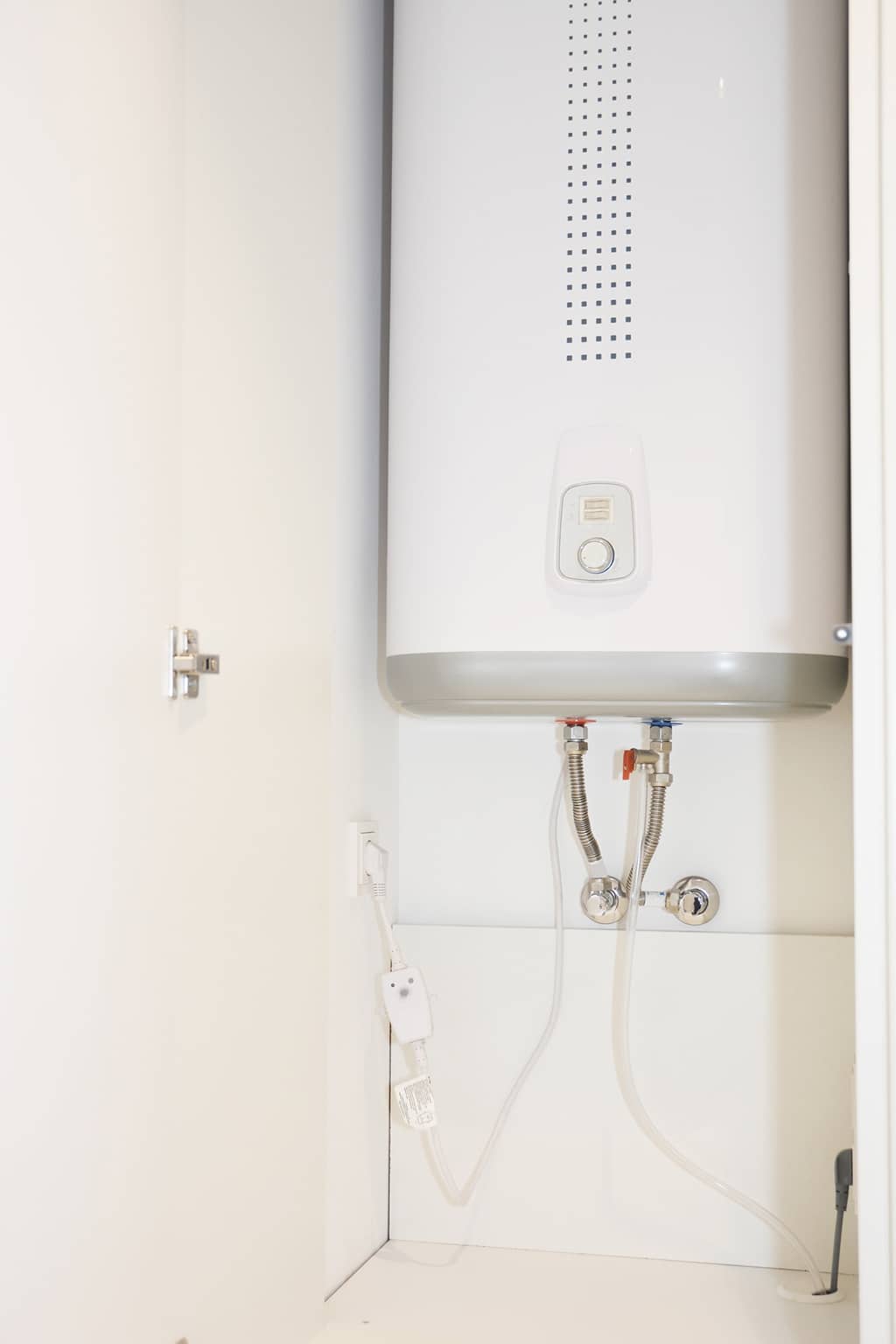
Tankless water heaters are a great option for many homeowners today. They can be installed for one specific area of the home or can provide hot water to the entire property. Here at bluefrog Plumbing + Drain of North Dallas, we think many families will want to consider a tankless water heater. Here are the reasons a tankless water heater can be a great option for your North Dallas property, along with the local factors you should weigh before you decide.
How a Tankless Water Heater Works
A traditional water heater keeps a large tank of water hot around the clock. A tankless unit works differently. When you open a hot water tap, cold water flows through the unit, a flow sensor activates a gas burner or electric heating elements, and the water is heated as it passes through. When you close the tap, the unit shuts off. That “on demand” design is why tankless heaters are sometimes called instantaneous or on-demand water heaters.
Tankless Water Heaters Waste Less Energy and Water
Not only does a tankless water heater typically use less energy to heat water, but it can also help reduce water waste. We’ve all let water run down the drain as we wait for the shower to warm up. A tankless unit delivers a continuous supply of hot water, typically at a rate of about 2 to 5 gallons per minute depending on the model and conditions, so you won’t run out halfway through a shower. Keep in mind that water still has to travel through the pipes to reach your faucet, so a home with long pipe runs may see some wait time unless a recirculation option is added.
Tankless water heaters eliminate “standby losses,” which describe the energy wasted when heated water sits unused in a traditional tank. These losses add up over time, so a tankless water heater can lower energy use. How much you save depends on your household’s hot water habits, fuel type, and the unit you choose. The benefits aren’t only financial, either. Using less energy is better for the environment, too.
The Lifespan of a Tankless Water Heater
A typical tank water heater will generally last about 10 to 15 years. While that’s solid for an appliance you use every day, a tankless water heater can last 20 years or more. As with anything, its longevity depends on how well you take care of it. That extra service life can be valuable for a homeowner who plans to stay put. Annual maintenance is always a good idea, but beyond that, tankless water heaters require relatively little upkeep.
North Dallas Factors to Consider
Hard Water and Descaling
Much of North Texas has hard water. Calcium and magnesium can build up as scale on the heat exchanger inside a tankless unit, which reduces efficiency and can trigger error codes over time. Most manufacturers recommend periodic flushing, or descaling, and the right interval depends on your water hardness. Some homeowners pair a tankless heater with a water softener or scale-reduction system to help protect it.
Seasonal Water Temperatures
A tankless unit’s output depends on how much it has to raise the temperature of the incoming water. In summer, North Dallas tap water is warm, so the heater has an easier job. During a cold snap, incoming water is much colder, and the same unit may deliver fewer gallons per minute at your desired temperature. A properly sized unit accounts for winter conditions, not just summer ones.
Gas vs. Electric
Many North Dallas homes have natural gas service, and gas tankless units are popular for whole-home use. Switching from a gas tank to a gas tankless heater may require a larger gas line and a new venting system, since tankless burners demand more gas while they run. Electric tankless units avoid venting but can require significant electrical capacity. A licensed plumber should evaluate your home’s gas supply, venting, and electrical service before recommending a model.
Freeze Protection
Units installed in garages, attics, or on exterior walls need protection during hard freezes like Winter Storm Uri in February 2021. Many tankless models include built-in freeze protection that relies on electricity, so a power outage during a freeze can leave the unit vulnerable. Ask your plumber about draining procedures and insulation for exposed piping.
Is a Tankless Water Heater Right for Your Home?
A tankless water heater may be a great fit if:
- Your household often runs out of hot water with your current tank
- You want to free up floor space in a garage, closet, or utility room
- You plan to stay in your home for many years
- You want to reduce standby energy waste
A traditional tank might make more sense if:
- Your gas line or electrical service would need major upgrades
- You want the lowest upfront installation cost
- Your household regularly runs several showers and appliances at the same time and you’d prefer not to size up to a larger tankless unit
What Installation Involves
Installing a tankless water heater is more involved than swapping one tank for another. A professional installation typically includes sizing the unit based on your fixtures and peak demand, evaluating and upgrading the gas line or electrical circuit, installing proper venting, adding isolation valves that make future descaling easier, and making sure the installation meets local code. Many North Dallas cities require a permit for water heater installations.
Maintaining Your Tankless Water Heater
To get the long service life tankless units are known for, plan on:
- Flushing or descaling the heat exchanger on the schedule your plumber recommends for your water hardness
- Cleaning the inlet water filter screen
- Checking the venting and air intake for blockages
- Watching for error codes and addressing them promptly
Explore Tankless Water Heaters With bluefrog Plumbing + Drain of North Dallas
If you think a tankless water heater could be perfect for your North Dallas property, our licensed plumbers can help you decide. We’ll look at your home’s hot water needs, gas or electrical service, and venting, then give you upfront pricing on the options that make sense. We serve Frisco, Plano, McKinney, Allen, Denton, and surrounding communities, and we’re available 24/7. Call us for more details.
Photo by MchlSkhrv for Shutterstock