












$53OFF
Open now · 24/7 across North Dallas
Water Filtration Systems in North Dallas
Better-tasting water from every tap: whole-house and under-sink filtration matched to your water, installed cleanly by licensed plumbers.
- Free diagnostic
- Upfront pricing
Trusted & verified
Rated, reviewed and recognized.
Tap any badge to see the listing for yourself.
Quick check
Signs you need water filtration systems
Tap anything you’ve noticed at home. If a few of these sound familiar, it’s time for a licensed plumber to take a look.
The bluefrog way
Why North Dallas calls us for water filtration systems
Licensed plumbers, a free diagnostic and an upfront price you approve before we start. Every time.
Matched to your water
We look at your utility’s water report and, when useful, test your tap water so the system targets what’s actually in it, not a generic list.
Installed with service in mind
Bypass and shutoff valves, proper drains, air gaps and bonding are part of every install, so filters are easy to change and nothing leaks.
Only what you need
Sometimes a softener or an under-sink filter solves the problem better than a whole-house system. We explain the options and price each one upfront.
How it works
Your water filtration systems visit, step by step
Water consultation
We talk through your concerns, review your utility’s water report and test your water when useful to see what’s actually coming out of the tap.
Recommend and price
You get a recommendation sized for your household, with a clear explanation of what it will and won’t treat and an upfront price.
Clean installation
We install the system with shutoff and bypass valves, proper drain connections and bonding, then flush the new filters and check pressure.
Test and walk-through
We check every connection for leaks, confirm water flow and show you how the system works and when filters will need replacing.
The complete guide
North Dallas tap water is treated and regulated, but many homeowners still don’t love the chlorine taste, the white scale on fixtures or the earthy flavor that can show up in the summer. A water filtration system can improve the taste, smell and feel of your water, and the right one depends on what’s actually in your water and what you want to change. bluefrog Plumbing + Drain of North Dallas installs and services whole-house filters, under-sink drinking water systems and reverse osmosis units across North Dallas. We help you choose a system that fits your home, install it cleanly and show you how to keep it working.
What’s in North Dallas Tap Water?
Most homes in our area get water from a city or regional utility that draws from North Texas lakes, treats it and tests it to meet federal and state standards. Even so, several common complaints lead homeowners to look into filtration:
- Disinfectant taste and odor: Utilities use chlorine or chloramine to keep water safe in the pipes. It works, but many people notice the taste.
- Hardness: Calcium and magnesium leave white scale on faucets, glass shower doors and inside appliances. This is a hardness issue, which a water softener addresses better than a filter. Learn more in our article Is Dallas water hard or soft?
- Seasonal taste changes: Lake water can pick up an earthy or musty taste in warm months. It’s generally a taste issue, not a safety one, but carbon filtration helps.
- Sediment: Older service lines, main breaks and city work can send grit or discoloration into your plumbing.
- Older plumbing: Homes with aging galvanized pipe may notice rust-colored water that comes from inside the house rather than the city supply.
Your utility publishes an annual water quality report, often called a Consumer Confidence Report, that lists what it tested for and what it found. It’s a great starting point, and we can also test your water at home to see what’s coming out of your tap.
How Water Filtration Works
Different filter media target different problems, which is why one filter rarely does everything.
Sediment Filtration
A physical screen or cartridge traps sand, rust and grit. It’s usually the first stage of a whole-house system and protects the filters after it.
Activated and Catalytic Carbon
Carbon is the workhorse for taste and odor. It reduces chlorine and many organic compounds. Because many North Texas utilities use chloramine, which is harder to remove than chlorine, we often recommend catalytic carbon designed for it.
Reverse Osmosis
Reverse osmosis (RO) pushes water through a very fine membrane and removes a much broader range of dissolved substances than carbon alone. It’s usually installed under the kitchen sink for drinking and cooking water, with its own faucet.
UV and Specialty Treatment
For private wells or specific contaminants, ultraviolet disinfection, iron filters or other specialty media may be part of the system. We recommend these only when testing shows they’re needed.
When comparing products, look for independent certification to NSF/ANSI standards for the specific contaminants you care about, rather than relying on general marketing claims.
Water Filtration Systems We Install
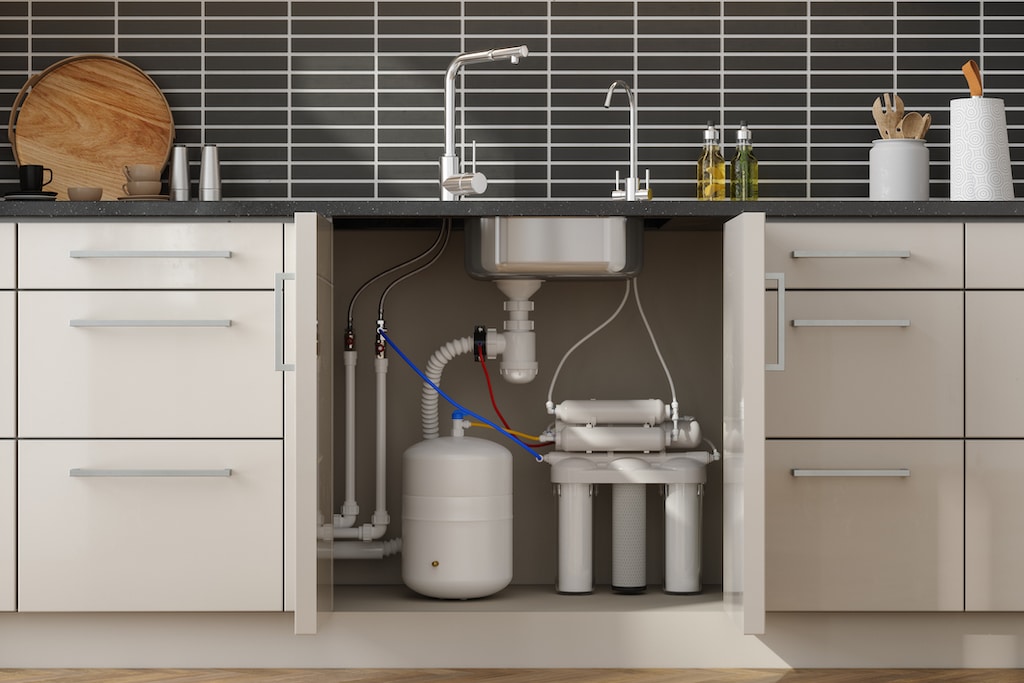
Photo By onurdongel at iStock
Whole-House (Point-of-Entry) Filtration
A whole-house system treats water where it enters the home, so every shower, sink and appliance gets filtered water. It’s the right choice if you want to reduce chlorine or chloramine for bathing and laundry as well as drinking. In many North Dallas homes the main line enters through the garage, which is usually the best place for the system.
Under-Sink Drinking Water Systems
For better-tasting drinking and cooking water, an under-sink carbon filter or reverse osmosis system is often the most cost-effective upgrade. We can also run a line to your refrigerator and ice maker so they get the same filtered water.
Reverse Osmosis Systems
An RO system typically includes pre-filters, the membrane, a small storage tank and a carbon polishing filter, all tucked under the sink. Because the membrane rinses itself as it works, some water goes down the drain during filtering. Some systems add a remineralization stage for taste. We’ll check cabinet space, the drain connection and whether your countertop or sink has room for the dedicated faucet before you choose a model.
Faucet-Mount and Pitcher Filters
These are inexpensive and portable, which makes them handy for renters. They have limited capacity and slow flow, though, and they need frequent cartridge changes. If you find yourself refilling a pitcher all day, an under-sink system is usually a better long-term fit.
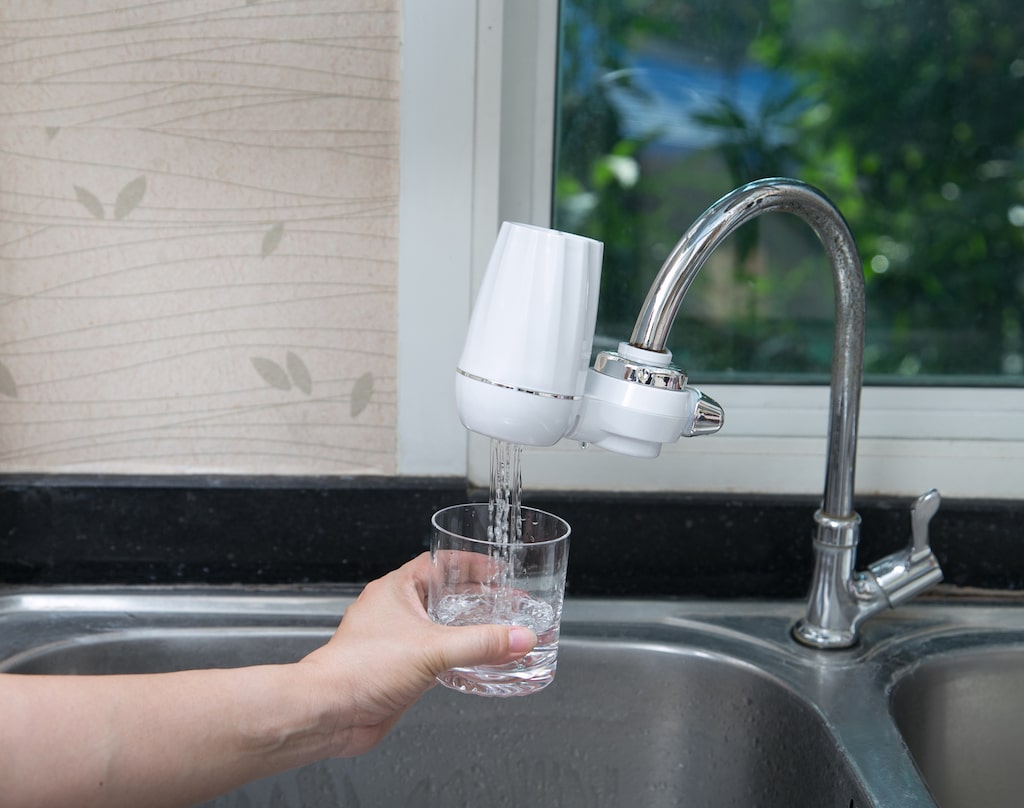
Photo By venusphoto at iStock
Filtration Plus Softening
Many homes get the best results by pairing a softener for hardness with carbon filtration for taste and an RO system at the kitchen sink. We’ll explain what each piece does so you only buy what you need.
Well Water Filtration
Most homes in our area are on city water, but some properties in rural parts of Denton and Collin counties rely on private wells. Well owners are responsible for their own water quality, so testing comes first. Depending on the results, a well system may include sediment filtration, treatment for iron or sulfur odor, a softener and UV disinfection. We’ll design the system around the test results rather than guessing, and we can recommend a certified lab if you need a full analysis.
Filtration, Hard Water and Your Appliances
Scale and sediment don’t just affect taste. They build up inside water heaters, tankless heat exchangers, dishwashers, ice makers and faucet cartridges, and they make those appliances work harder. A sediment pre-filter protects the rest of your plumbing from grit, while a softener handles the minerals that cause scale. If you’re planning a new water heater or a tankless conversion, it’s a good time to talk about treatment, since protecting a new appliance from day one is easier than descaling it later.
Choosing the Right Filtration System
We start with a conversation and, when useful, a water test. Then we look at:
- Your goals: Better taste, less chlorine smell, less scale, protection for appliances or all of the above
- Household size and flow: A whole-house system must be sized so it doesn’t cause a noticeable pressure drop when several fixtures run at once
- Space and access: Where the main line enters, room under the sink and access to a drain for RO systems
- Ongoing costs: How often filters and membranes need replacing and what they cost
Our recommendation comes with an upfront price that covers the equipment and installation, so you can compare options clearly. If a simpler fix, like an under-sink filter or a properly adjusted softener, will solve the problem, we’ll tell you before recommending a larger system.
Professional Water Filter Installation
A filtration system is only as good as its installation. Every install includes:
- Shutoff and bypass valves so the system can be serviced or bypassed without cutting off water to the house
- Proper drain connections and an air gap for RO systems, as required by code and the manufacturer
- An electrical bonding jumper when a metal water line is interrupted, so your home’s grounding path stays intact
- Flushing new filters, checking pressure and testing every connection for leaks
- A walk-through of how the system works and when filters need changing
DIY kits can work, but common mistakes include missing bypass valves, kinked RO lines, leaking push fittings and filters installed backward. A leak under the kitchen sink or in the garage can do real damage, so it pays to get the connections right.
Water Filter Maintenance and Repair

Photo By Wavebreakmedia at iStock
Filters work by capturing what you don’t want, so they eventually fill up. Replace cartridges on the schedule the manufacturer recommends, or sooner if you notice:
- Low water pressure at the filtered faucet or throughout the house
- The chlorine taste or odor coming back
- A slow-filling RO tank or a dedicated faucet that only trickles
- Leaks or drips around housings and fittings
Filters are easy to forget once the water tastes good again, so many homeowners set a calendar reminder or ask us to handle filter changes on a regular schedule.
We service systems we installed and many we didn’t, replacing filters and membranes, fixing leaks and correcting installation issues. If water damage has already reached cabinets or flooring, our leak detection and repair team can make sure nothing else is hiding.
Schedule a Water Filtration Consultation
We install and service water filtration systems in Frisco, McKinney, Allen, Denton, Lewisville, Carrollton and across North Dallas, including Plano and Flower Mound. If you’re adding a new faucet for drinking water or updating kitchen fixtures at the same time, our fixture replacement team can handle it in the same visit. Schedule service online or contact us with questions about your water.
Water Filtration
Specialized water filtration systems services
Service area
Water Filtration across 25 North Texas cities
Our trucks are in these neighborhoods every day, so help is close whether you call at noon or midnight.
From the blog
Helpful water filtration systems guides
 Water Filtration SystemThree Reasons to Get a Water Filtration System in North DallasClean water can directly affect your health and that of your entire family. Today, most people tend to drink chlorine-treated water from the city’s facilities.Read article
 plumbing maintenanceHow to Prevent Water Loss at HomePreventing water loss means finding leaks maintaining fixtures and upgrading systems to stop waste. This guide helps homeowners and property managers act early when meters stains or smells indicate a problem.Read article
 drainage systemDallas Water Infrastructure Improvements ExplainedDallas water infrastructure improvements covers projects that repair pipes replace valves and reduce leaks across the public water network. This summary is for homeowners and property managers who want to know how upgrades affect pressure bills and disruption.Read article
 PlumbingCommon Signs You Need Plumbing Service for Water Quality | Denton, TXAre you thinking that there’s a problem with your water but you’re not quite sure? Well, these are a few ways that you can absolutely tell there’s something going on and that you need to call a professional plumbing service to take care of it.Read article
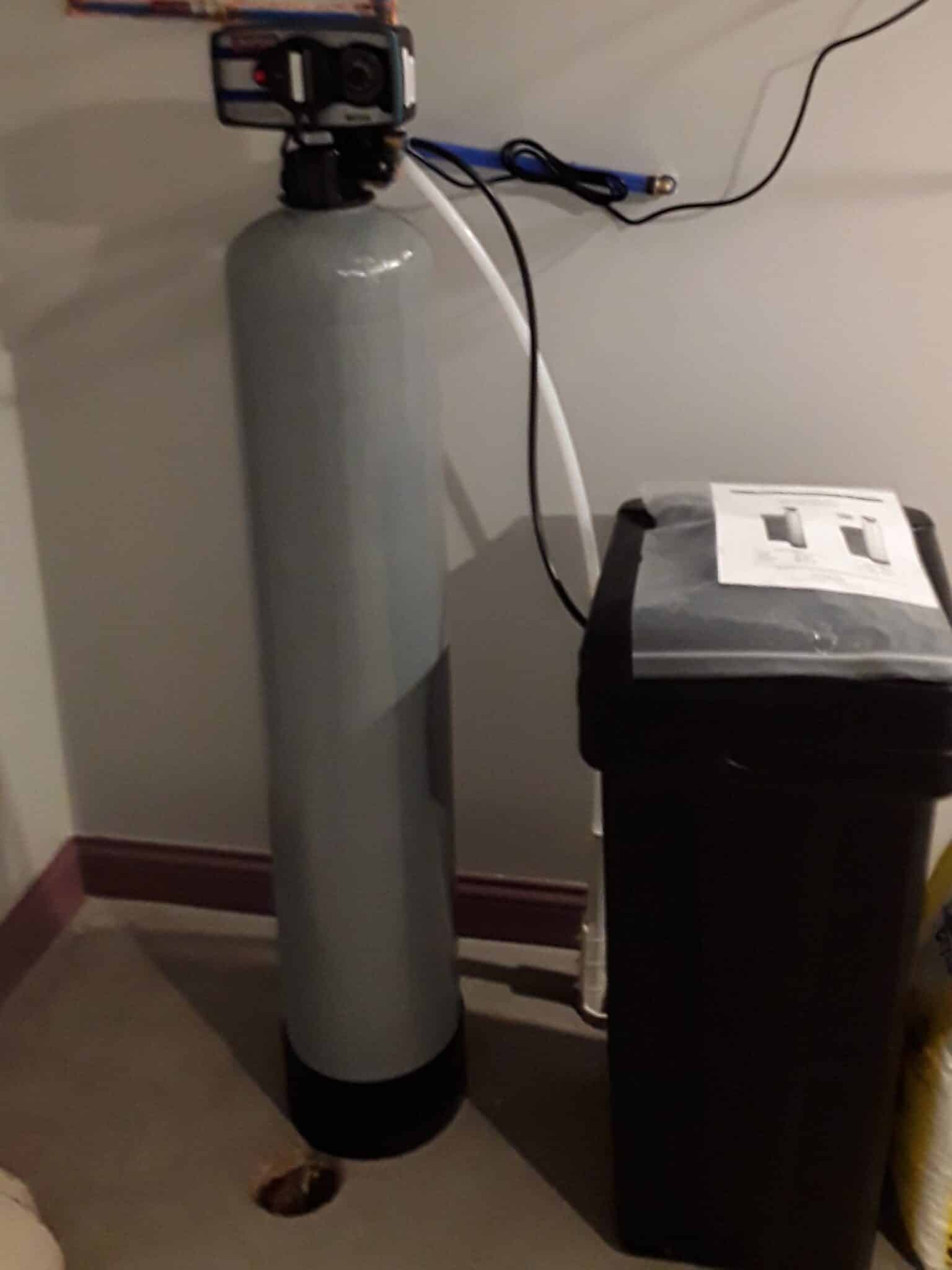 Water Filtration SystemIs Dallas Water Hard or Soft?Is Dallas water hard or soft? It’s hard, measuring between 140–160 mg/L, which puts it well into the “hard” category.Read article
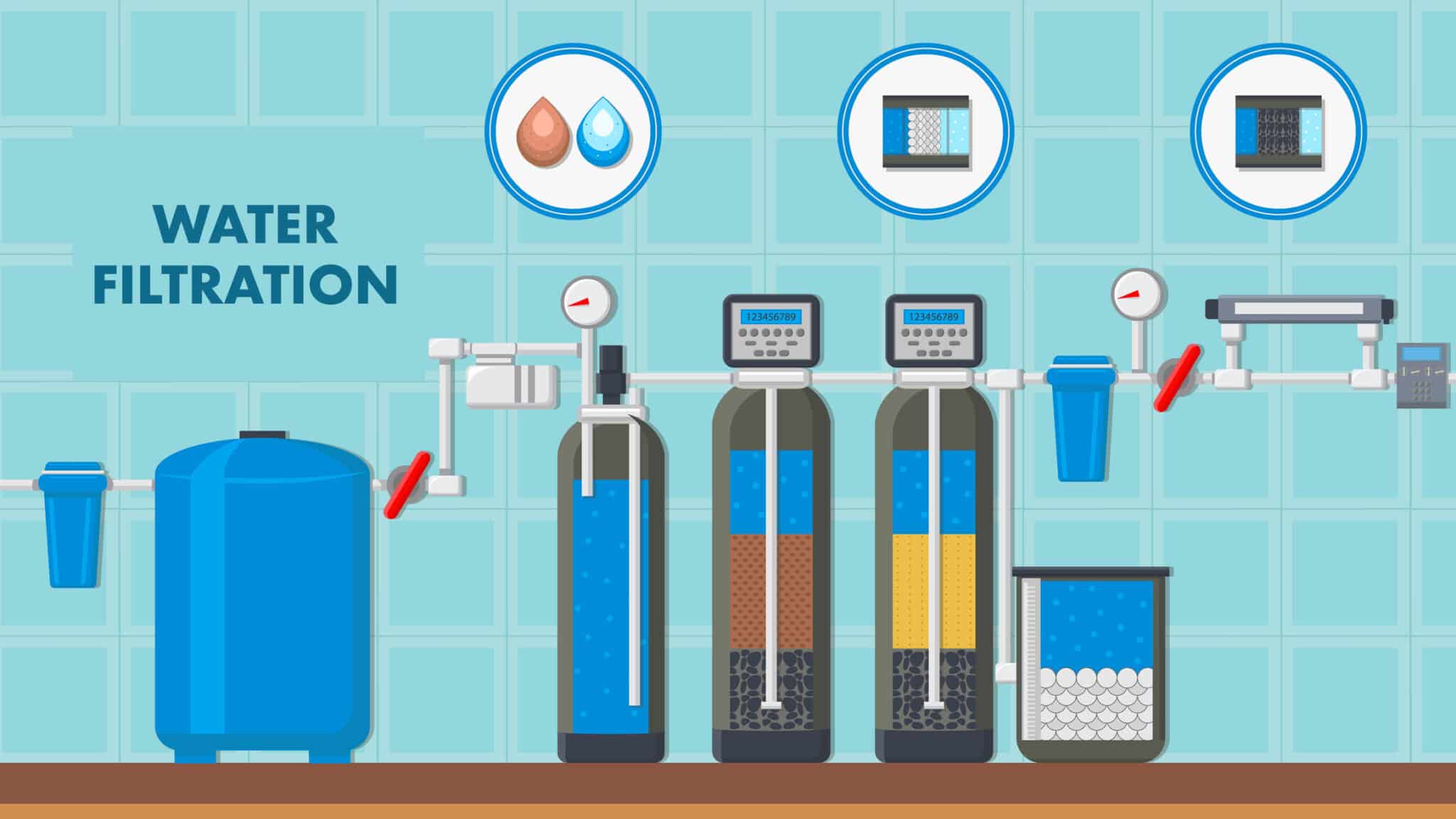 PlumbingEnhancing Carrollton Homes with Advanced Water FiltrationCarrollton, TX, homeowners are increasingly recognizing the importance of high-quality water filtration systems in their homes. With advancements in technology, modern water filtration solutions offer more than just clean drinking water; they enhance overall home wellness and safety.Read article
What North Dallas is saying
Neighbors who love their plumber.
 James Houstona week ago
Friendly, professional and efficient. Competitive quote for job😊
 Cynthia Warnera week ago
Martin was so great. You can tell he is extremely knowledgeable, thorough, and kind. We have been using bluefrog for years, and have never had a bad experience. We would highly recommend them!
 Chris Wohletza week ago
Mike was awesome. He got my plumbing issues resolved and answered all my questions. I highly recommend this company.
 Diane Blaukat2 weeks ago
Did excellent job - very complete
 Ronald Romancheka month ago
Blue Frog Plumbing contacted me after I made an inquiry through Angie’s List. I needed a new bathtub faucet and shower head assembly in my 67 year old house. Tim was a skilled pro and thoroughly explained what he could do and provided op…
 Frank DeLauraa month ago
My Bluefrog experience was excellent. My techs, Joseph and Uriel, were both fantastic. They showed up exactly on schedule, were extremely personable, thoroughly explained everything they did, answered all of my questions with knowledge…
 eric Choia month ago
We recently had our plumbing inspection with Sean, and we couldn’t have been more impressed with his professionalism, knowledge, and thoroughness. Sean took the time to carefully explain what he found, answer every question we had, and…
Questions, answered
Water Filtration FAQs
Don’t see your question? Call (469) 214-2582. Phones answered 24/7.
Is North Dallas tap water safe to drink?
Public water systems in our area are treated and tested to meet federal and state drinking water standards. Many people install filtration mainly to improve taste, reduce chlorine or chloramine and cut down on scale. Your utility’s annual water quality report lists what was tested and found.
What’s the difference between a water filter and a water softener?
A softener removes the calcium and magnesium that cause hard water and scale. A filter reduces things like chlorine, sediment and compounds that affect taste and odor. Many homes benefit from both, and we can explain which one addresses your concerns.
Will a whole-house filter remove chloramine?
Standard carbon reduces chlorine well but is less effective on chloramine, which many North Texas utilities use. Catalytic carbon and properly sized systems are designed for it. We’ll help you choose media that matches your water supply.
Is reverse osmosis worth it?
For drinking and cooking water, reverse osmosis removes a broader range of dissolved substances than carbon alone and many people prefer the taste. It produces some wastewater during filtering and needs regular filter and membrane changes. It’s usually installed under the kitchen sink with its own faucet.
How often do filters need to be changed?
It depends on the system, your water and how much you use. Follow the manufacturer’s schedule, and change filters sooner if you notice lower pressure or the old taste coming back. We’ll give you a clear maintenance schedule when we install your system.
Will a filtration system lower my water pressure?
A properly sized and maintained system shouldn’t cause a noticeable pressure drop. If pressure falls over time, the filters are usually due for replacement. Undersized whole-house systems are a common cause of pressure complaints, which is why we size for your household.
Can you install a filter I bought online?
In many cases, yes. Share the model when you schedule so we can confirm it suits your water and plumbing. We’ll install it with the shutoff and bypass valves and connections it needs.
Where is a whole-house filter installed?
Usually near where the main water line enters the home, which in many North Dallas houses is in the garage. If your home already has a softener loop, the filter often goes on that loop. We’ll pick a spot with room for filter changes and protection from freezing.
Need water filtration systems? We’re ready right now.